 Last Monday, Sook Ching read from Marva Dawn’s Reaching Out Without Dumbing Down. It was a chapter where Neil Postman’s Amusing Ourselves to Death was quoted at length. Something about TV and how it has changed discourse and lowered our information/action ratio. Er, it simply means we’ve got more information than we know what to do with it, and we’re no longer reflecting and responding appropriately to all the news and info we receive.
“Most of our daily news is inert, consisting of information that gives us something to talk about but cannot lead to any meaningful action,” says Postman. Seems to me what's true in the TV age is just as true in the internet age. Dawn agrees with Postman’s thesis, but she surprises with a disarming admission: “In my naivete I believed that most people put truth into practice…” That human nature defies coherence as much as it seeks for one makes a case for that inner contradiction that the Bible calls ‘sin.’
Elliot’s choice was a long passage from Freakonomics by Steven Levitt and Stephen Dubner. Taken from a chapter entitled, 'What the KKK and real-estate agents have in common', you know it's going to be intriguing or funny, or both. Well, it had us all in stitches. It was about how Stetson Kennedy infiltrated the Ku Klux Klan and single-handedly brought the white supremacist group down (Stetson’s claims have been somewhat tainted of late by new revelations, but the infiltration bit is correct). By the way, Superman had a part in it, and you just have to read about it to know that truth indeed is stranger than fiction. The bottom line? Information is power.
Ethan read from his assigned study from B.K Kuiper’s The Church in History, and then cross-referencing it against Lion’s History of Christianity. Kuiper’s book described the Montanists as ‘heretical’ while the other book gave a quick overview and an unhelpful conclusion that they were ‘fanatics.’ So which is which, Ethan asked? How do you define heresy, and who decides it? Of course that led to a brief discussion on creeds and fundamentals subscribed by all evangelical Christians. What was clear was the fact that credal confessions of the 1st century church spelled out what was believed to be non-negotiables of the faith, strengthening its hand as it engaged spurious teachings and heresies.
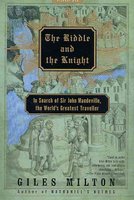
I picked a recent book I bought at Border’s called, The Riddle and The Knight. Written by Giles Milton it traces the fantastical journeys of 14th century Sir John Mandeville, England’s own Marco Polo. A sort of travelogue with a bit of sleuthing thrown in. There's an interesting bit about how Christianity came to Russia. It seems Vladimir the pagan prince of Kiev sent out emissaries to seek out the ‘true faith’ to take back to his land. After a couple of misadventures (including interviews with Jews and Muslims), his men ended up in Constantinople.
It was a Greek Orthodox service in Haghia Sophia that did it. They went home with this report: “We knew not whether we were in heaven or earth, for surely there is no splendour or beauty anywhere upon earth. We cannot describe it to you; only this we know, that God dwells there among men, and that their service surpasses the worship of all other places.” Now, doesn't that make you want to ask: what would visitors take away from their visit to our own churches today?