Thursday, October 13, 2005

Never say never

These are amazing stories at a time when tragedy seems the rule. In Italy, a brain injured 38-year old man written off by doctors as nearly dead, suddenly awoke saying he heard and understood conversations around him during his silent ordeal.
Salvatore Crisafulli, a father of four, is describing his case as a "miracle" which proves that lost causes are anything but hopeless and his recovery appeared to strengthen the hand of Italians opposed to end-of-life solutions.

His brother even called Crisafulli "an Italian Terri Schiavo case" with reference to the brain-damaged Florida woman who died in March after her feeding tube was removed.
Earlier this year, an Arkansas man Terry Wallis inexplicably came out of a 19-year coma. Terry who was left paralysed and in a coma in 1984, was 19 and newly married with a baby girl, when his truck went over a cliff.

Channel 4 Dr Martin Brookes gave an interesting review of that miraculous recovery and wrote about the difficulties involved in assessing the effects and outcomes of comatose patients. Dr Brookes’ conclusion?
Of course, Terry is not out of the woods yet. His awareness of himself and his surroundings are still distorted, and he seems to lack a short-term memory. Perhaps these faculties will never be regained. But if the Terry Wallis story teaches us anything, it is never say never.
How do these stories compare with current views on abortion, infanticide, and euthanasia as they are reported in the news? Francis Schaeffer (together with then US Surgeon-General Dr C. Everett Koop) in his prophetic book Whatever Happened To The Human Race? tells us what’s at stake:
Cultures can be judged in many ways, but eventually every nation in every age must be judged by this test: how did it treat people? Each generation, each wave of humanity, evaluates its predecessor on this basis. The final measure of mankind's humanity is how humanely people treat one another.
R. Albert Mohler Jr. surveys the last 25 years since the publication of WHTTHR? and agrees with the writer that when humanity loses the high view of human life as imago dei the doors are flung wide open for greater 'anti-human' abuses. He quotes Schaeffer: "Any person can be obliterated for what society at one moment thinks of as its own social or economic good." Humanity stands on the brink of the abyss, says Mohler, and quite possibly we are edging nearer everyday.

Back in 1988, I came across a remarkable letter to the editor in the Economist written by Alison Davis from Blandford Forum, Dorset. I couldn't resist jotting down (yes, I'm an inveterate jotter) her stinging mail in response to articles in the January 23 issue of that magazine

Sir:

You seem to assume that abortion on the grounds of handicap is not only acceptable, but desirable.

How can this be justified logically and ethically, unless one believes that severe handicap is a fate worse than violent and untimely death?

I am confined to a wheelchair due to spini bifida. I find this eugenic mentality insulting both to my humanity and to my intelligence. Why is it more desirable to dismember a child than to allow it to become like me?
What is even more remarkable is that a quick search online led me to Alison's story here. This amazing woman (view her pix) now 50, still lives in Dorset where she is National Co-ordinator of No Less Human a group within The Society for the Protection of Unborn Children. Amazing! Way to go Alison!

Sunday, October 09, 2005

da Bible in sms

Well, whaddaya know? It's the Bible in sms text-speak. "It's a logical step. Our aim at the Bible Society is to get the Bible out there among the people and this is a very effective way of doing it," says the Bible Society in Australia spokesman Michael Chant. Read the BBC news here. For a free download of the SMSBible, point your mouse here.

Friday, October 07, 2005

Rediscovering the Bible

I don’t know if there’s any way to verify it, but it has often been said that the Bible is the most widely read book, number one on the best seller list, etc. Muslims, on the other hand are equally convinced that the Quran on the contrary, reigns supreme. Whichever way you lean, the fact is, the Bible remains one of the most influential books (if not most widely read) in Western Civilization.

The Bible has left an indelible and undeniable imprint on literature and the arts. Particularly in the English-speaking world, ideas and language have been enriched, so words and phrases like ‘scapegoat,’ ‘two-edged sword,’ ‘prodigal son,’ to name a few, are commonly used although few acknowledge or are aware of their connections. More so with the Bible unceremoniously banished from public life and academia in these postmodern and irreligious times (Schaeffer’s description of “post-Christian” West comes to mind).

The loss of Bible literacy is a shame not least because I believe it to be the inspired word of God, but because it cancels out an idiom by which we understand the shape and pulse of Western civilization. Back in 1980 Dr Leland Ryken published the seminal “The Literature of the Bible” but that book had a somewhat narrow appeal to those familiar with the Bible as a religious text and were looking to understand its literary types and assorted genres.

Now, a group of scholars and businessmen (including Christian conservative Os Guinness) hopes to bring the Bible back from exile and make it more accessible to the uninitiated. Called the Bible Literacy Project, the group set out in 2001 to write “a Bible textbook that dispels cultural ignorance while respecting both the law and the sensibilities of Jews and Christians, who consider some or all of the Scriptures sacred.” 4 years later, the group recently announced the fruit of its labour of love, titled, The Bible and Its Influence. Gene Veith has this to say of its achievements:
The Bible and Its Influence, released on Sept. 22, hits the mark. The curriculum, designed for high school, works its way through the entire Bible, from Genesis to Revelation, introducing each section of Scripture, discussing the text and its themes, and showing where elements of each section manifest themselves in the culture. The textbook does not shy away from religion—which would be like discussing Moby Dick while ignoring whales—but abides by its promise and the legal statutes that religious ideas "neither be encouraged nor discouraged."
Besides the above textbook, here’s something that might appeal to those more inclined towards simpler reads of the Reader’s Digest sort. British former headteacher the Rev Michael Hinton is doing us all a favour with a new version of the Bible called “The Hundred Minute Bible.”

It appears it took Rev Hinton two years to scale down the Bible’s 66 books into a 60-page edition containing no more than 20,000 words. 11,000 copies of the 100-Minute Bible are being distributed to churches and schools as I write. (Hey, come to think of it, Reader's Digest does have its own version of the Bible condensed from the RSV with no less than Bruce Metzger as Editor!) The Christian Science Monitor headlined the news as Christianity in a Nutshell. The BBC quoted consultant Bishop of Jarrow, the Rt Rev John Pritchard as saying,
"This is an attempt to say, 'Look, there's a great story here - let's get into it and let's not get put off by the things that are going to be the sub-plot. Let's give you the big plot'."
I find all this development fascinating and timely. Honest. There are other books apparently, and David L. Jeffrey gives a breathless overview of books on the literature of the Bible in the 80s. I stumbled on this by accident, but this guide for the ‘perplexed’ which appeared in the University of Toronto Quarterly 1990 makes interesting reading (considering how remote my chance of actually owning some of these titles). However I was especially struck by this last sentence on his rambling article:
Perhaps one of the features which draws postmodern criticism back to the Bible is likely to remain unacknowledged: namely, that the Bible is the last remaining text which continues to resist being subordinated by its criticism.
Now, isn't that something.

Wednesday, October 05, 2005

Root causes

Bali’s second bomb blast was almost 3 years to a day from the first tragedy. My family and I have shopped in Kuta and dined at Jimbaran, and I feel pained by the senseless slaughter of innocents. As always, denunciation of terror bombings were politely offered topped up with politically correct calls to investigate ‘root causes.’ Malaysia’s PM Pak Lah joins the chorus:
"A sense of being marginalized, a sense of alienation is one of the root causes that can bring about the kind of reaction which can also be terrorism,'' Abdullah said. "People want to be recognized, people want to say they want to have a share, they want it and if they cannot get anywhere, they will resort to the kind of action that people say is undesirable."

"These deprived, alienated people, with no opportunities for effective participation, can become the Trojan horse for others with other kinds of agenda,'' he said. "They will be exposed to other people who will want to champion their cause but really have a different agenda."
Sure, look for root causes, but what comes next?

There are marginalized people everywhere, but until recently, no one in his right mind saw suicide bombings as a political solution. What if these root causes were driven by an ideology that sought world dominion? What if these atrocities were framed by a warped sense of race and religion? What ‘different agenda’ might it be that fails articulation? What do politicians mean when they speak of addressing root causes?

After World War I, the Germans also felt very much like the deprived and alienated our politicians refer to. A failed artist tapped into the nation’s humiliation following the Treaty of Versailles 1919, the Great Depression, among other reasons, and promised a restoration of national pride in a glorious Third Reich. In a few short years, over 50 million would be killed in a global conflict that was the Second World War.

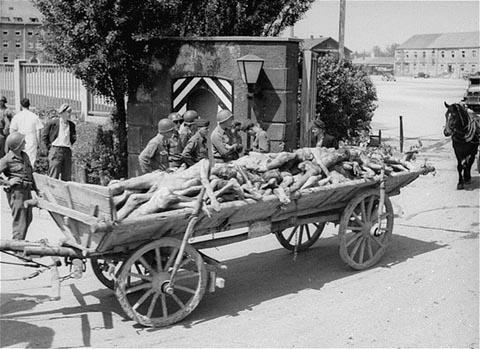
Hitler’s perverted dream of Aryan purity led to the systematic extermination of thousands of Gypsies, homosexuals, and 6 million Jews. Jews were first blamed for Germany’s economic hardship, and deliberately vilified as human vermin, carriers of disease, and seeds of corruption. After this, the gas chambers of Auschwitz, Bergen-Belsen, and Dachau were not only understandable but a logical conclusion to twisted ambition.


It’s possible that the then British Prime Minister Neville Chamberlain ‘understood’ the root causes behind Hitler’s rise to power. You could say Chamberlain was betrayed by his overestimation of human decency (and underestimation of the human heart’s depravity). His naïve pursuit of diplomacy and appeasement merely invited the invasion of
Poland, and forever earned him a place in history’s hall of shame as the leader who signed a resolution with Hitler and made premature boast of "peace for our time." You do not negotiate with prophets of terror. You do not make concessions to perpetrators of evil.

All this talk about root causes is not likely to put an end to suicide bombings. In an age as muddled as the one we are in today, I fear history is set to repeat itself.